


BNB Note:
While politics is often analyzed from the outside, BNB’s Guest Editorial Series aims to flip that perspective by highlighting the firsthand experiences of those working inside the political and policy arena. This includes lawmakers crafting legislation, candidates navigating the campaign trail, career civil servants implementing public programs, and political operatives shaping strategy behind the scenes.
The goal is not to litigate every claim or endorse every position, but to provide readers with direct insight into how decisions are made, how institutions function, and how power operates in practice.
Below, is a guest editorial from Trina Swanson, the DFL-endorsed candidate running to represent Minnesota’s 8th Congressional District in the U.S. House of Representatives.
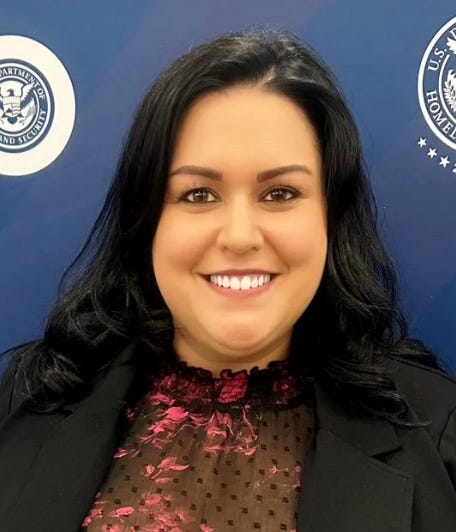
For the last eight months, I have spent more time listening to people across Minnesota’s Eighth Congressional District than talking at them. Too often in politics, candidates arrive with rehearsed speeches and shallow talking points, shake a few hands, and move on. I am running a different kind of campaign focused on understanding what people are worried about, what pressures they are under, and where they feel government has left them behind.
What I have heard has been remarkably consistent regardless of where people live or how they vote. The promise of a stable life is slipping out of reach. Groceries, healthcare, housing, childcare, energy, and education all cost more, and wages are not keeping up. Families are working harder while their standard of living declines. People are asking whether anyone in Washington understands what their lives are like right now.
I get it. I have no political connections, and I don’t come from money. I come from a family of union members. I was a member of the AFGE as a government employee. My father was a union carpenter and then worked at the paper mill. My mother was a member of the United Steelworkers for part of her career as a nurse of 42 years at Essentia-St. Mary’s. After suffering a stroke in 2018, she lost her job, and my parent’s health insurance, when she could not return to work quickly enough. My mom had planned to work until they both qualified for Medicare at 65. That plan collapsed overnight. Earlier this year, she needed open-heart surgery again, and one of the recommended drugs while she was awaiting surgery was $600 a month. These are not abstract statistics. This is my family, and probably many of yours too. Families are making daily decisions about whether they can replace a vehicle, save for retirement, help their children through school, or even afford gas and groceries. They want leaders who understand the realities of their lives and are willing to fight for policies that materially improve them.
In 2021, Congressional Democrats passed major investments in infrastructure and domestic manufacturing despite opposition from the vast majority of congressional Republicans, including Pete Stauber. These investments were meant to be a down
payment on reversing decades of industrial decline across the Midwest. Now some of that funding is reaching communities like ours. Federal funding is helping replace the aging Blatnik Bridge, a project the Twin Ports has needed for years. Pete Stauber voted against the funding, but he now campaigns as though he supported it.
Republicans like Stauber and Trump have tried to sell massive tariffs as a cure for American manufacturing, but the evidence tells a different story. After Trump’s “liberation day” tariffs, American manufacturing lost roughly 100,000 jobs, not to mention billions of dollars worth of lost markets for America’s farmers. American
workers don’t need the false protection of blanket tariffs, they need major investments in infrastructure and modern industry.
The Iron Range is home to some of the best iron ore in the world. Modern electric arc furnaces (EAFs) now make it most logical to manufacture steel close to where the ore is mined, because mass quantities of coal are no longer required. Yet the corporations funding Stauber’s campaign are investing billions of dollars in EAFs at mills in Arkansas instead of Minnesota to avoid union labor. Remember that next time you see Stauber taking credit for union jobs.
Republicans in Congress are still rescinding funding, delaying projects, and undermining long-term investments that communities across the Midwest were counting on while continuing to push tax policies tilted toward the wealthiest Americans and large corporations. Rural hospitals continue to struggle, infrastructure deteriorates, and Americans are paying the price.
Much of our political discourse has drifted toward spectacle instead of governance. Endless outrage cycles and media performances generate attention, but they do not lower grocery prices, reduce healthcare costs, expand childcare access, or help someone afford a first home. Voters across CD8 are exhausted by politics disconnected from practical problem-solving.
I spent my career in public service managing complex operations and solving problems requiring cooperation among people with different backgrounds. Public service is not about ideological purity tests or personal branding. It is about competence, accountability, and delivering results.
The people of CD8 are perceptive. They know when politicians are reciting talking points instead of speaking from knowledge. They can tell Stauber is just performing for the media when he goes to ribbon cuttings for infrastructure projects he voted against, instead of working for them. And they know their lives have become harder while too many leaders in Washington use the perks of office to insulate themselves from the consequences of the policies they support.
Instead of supporting cutting taxes for corporations and the richest Americans, I will fight for strong unions and apprenticeship programs. I will work to protect Social Security and Medicare, and support investments in infrastructure, domestic manufacturing, clean energy, and the industries that have sustained this district for generations. I will fight for universal healthcare, advocating to make healthcare affordable for all families while we undertake that fight. We can create good jobs in mining, manufacturing, and tourism, while protecting a Boundary Waters our kids and grandkids can still fish and canoe through.
I believe Washington can and must do better. I believe the Democratic-Farmer-Labor Party must renew its relationship with farmers and labor across Minnesota, build an economy that rewards work, and send leaders to Washington who view public office as an act of service rather than a vehicle to push corporate profit and self-enrichment.
If you agree, please go to trinaforcongress.com and join my team.
Holy crap. A politician who actually knows something about the stuff that matters in her district and how they relate to federal legislation and appropriations.