


BNB Note:
While politics is often analyzed from the outside, BNB’s Guest Editorial Series aims to flip that perspective by highlighting the firsthand experiences of those working inside the political and policy arena. This includes lawmakers crafting legislation, candidates navigating the campaign trail, career civil servants implementing public programs, and political operatives shaping strategy behind the scenes.
The goal is not to litigate every claim or endorse every position, but to provide readers with direct insight into how decisions are made, how institutions function, and how power operates in practice.
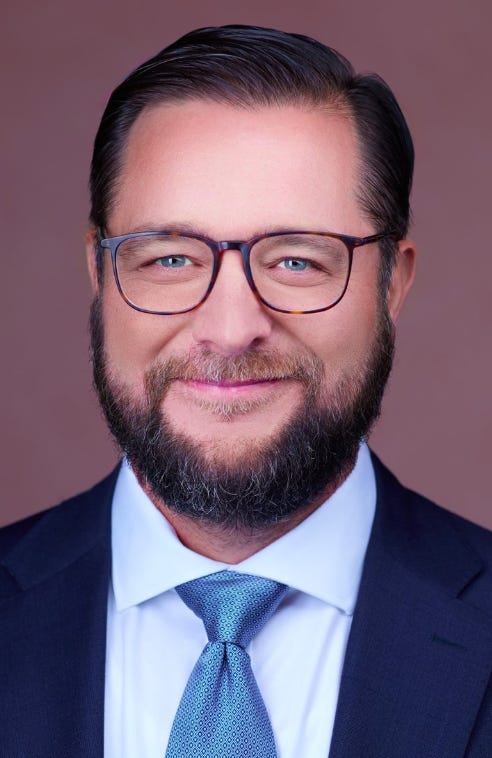
Below, is a guest editorial from Minneapolis Downtown Council President & CEO Adam Duininck.
Last fall, something remarkable happened in downtown Minneapolis. For two nights, David Byrne of Talking Heads performed at the Orpheum Theatre, while Purple Rain flickered across the street at the State. The sidewalks buzzed with people, color, and possibility. In that moment, the city itself felt like a stage—alive, collaborative, and full of creative electricity.
What unfolded on the Orpheum stage was more than a concert. It was an artistic feat that was also intellectual, civic, and deeply human. Byrne has always had a knack for dreaming a few steps ahead, and his performance was a reminder of how creativity, design, and community can intersect to create something transcendent. The overriding vibe that night was simple and irresistible: This must be the place.
Great downtowns generate that feeling. They aren’t defined by one skyscraper or one institution. They thrive when safety is foundational, when residents, workers, business owners, community partners, and law enforcement share a vision of belonging. They succeed when systems—transportation, public space, culture—are designed around people, not the other way around. And most of all, they flourish when movement, purpose, and collaboration flow together.
Downtown Minneapolis is at its best when it operates like that stage—dynamic, adaptive, intentionally designed to bring people together. A vibrant downtown invites us into a system where creativity, culture, and community reinforce each other, where good energy multiplies, and where people leave feeling inspired and connected.
We often hear the question: Is downtown back? But the more useful question is: What are we building it to be? Real optimism isn’t pretending every challenge is solved. It’s being clear‑eyed about what needs work while being confident in our capacity to shape what comes next.
And what comes next is already taking shape.
Downtown Minneapolis today is a place where people live in walkable neighborhoods close to parks, bike trails, transit, and hundreds of thousands of jobs. It’s where ambassadors greet visitors with help and a smile. It’s where more than 100,000 people can gather for major events—Taste of Minnesota, block parties on First Avenue, community celebrations that make the city feel like one big living room.
It’s a place where you can take in world‑class theater, orchestra performances, live music, and comedy shows. Where you can grab a cocktail at an ice bar, watch a fashion show, or—because this is Minnesota—even on a rooftop in January. It’s where entrepreneurs launch companies, attract talent, and drive results. It’s where chefs experiment, restaurants push boundaries, and creativity becomes an economic engine. It’s where fans howl for the Wolves, cheer on the Lynx, Skol for the Vikings, or root for the Twins on a perfect summer night.
And it’s a place with unmatched natural assets—miles of riverfront access that anchor the city in beauty and movement.
In other words, downtown Minneapolis is already a place where the pieces of a vibrant future exist. The task now is to continue designing systems that connect those pieces—to build the infrastructure of community as deliberately as we build the infrastructure of streets and buildings. When people feel welcomed, inspired, and fulfilled by their time downtown, they come back. And when they come back, the city grows stronger.
“This must be the place” isn’t just a lyric. It’s a directive. It’s a challenge to imagine what’s possible when culture leads, when collaboration is intentional, and when we treat community as the engine of our shared prosperity. It’s a reminder that our best days aren’t behind us—they are in front of us, shaped by the people who choose to gather, create, build, and dream here.
This is the place. This is home. This is our downtown Minneapolis.